
How to Create the Perfect Open Concept Layout
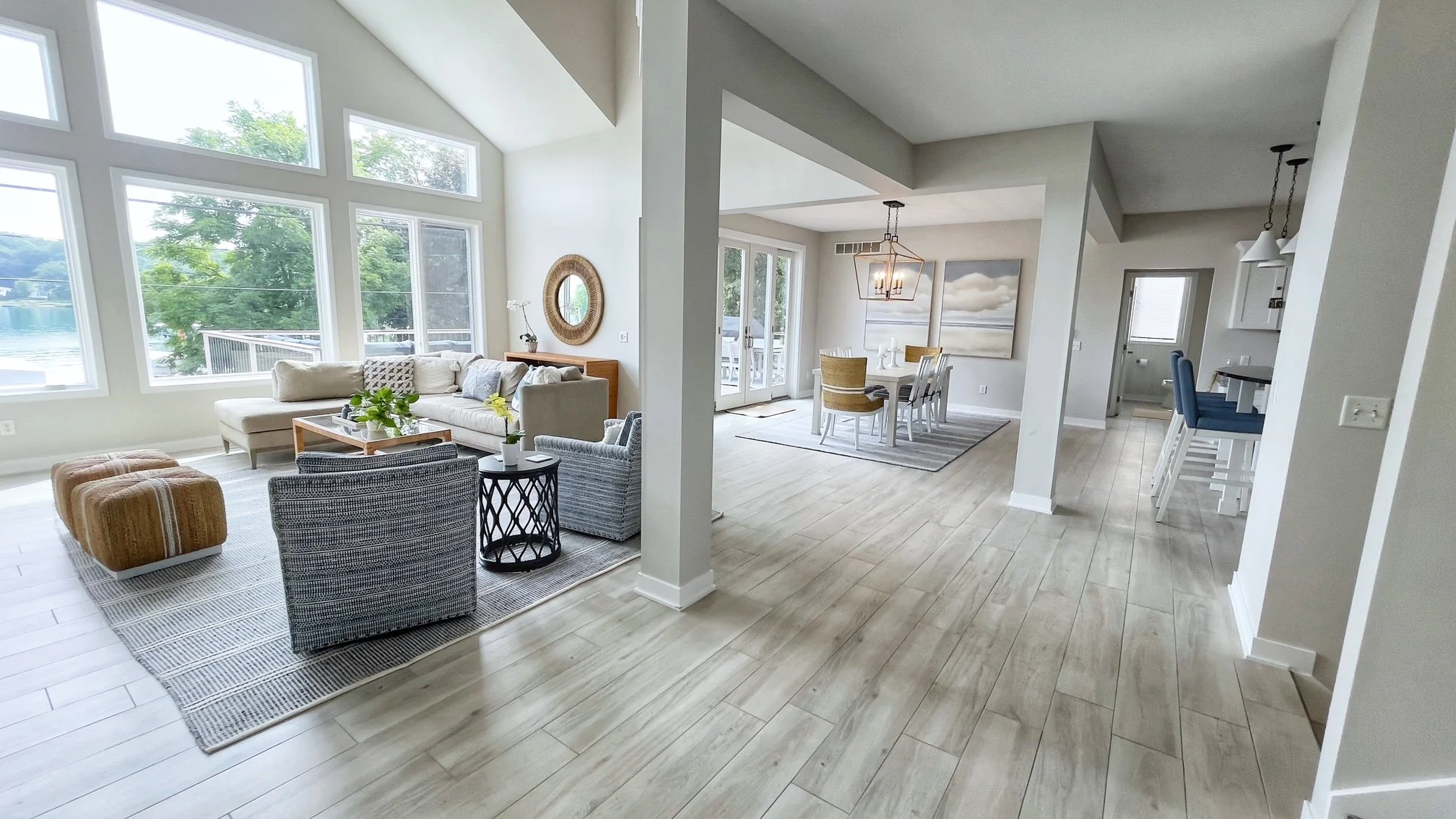
Interior Design Tips for Open Floor Plans
Open concept homes are beautiful—but without the right layout, they can feel awkward, echoey, or unfinished. A successful open floor plan needs intention, flow, and smart furniture placement.
Here’s how an interior designer approaches open concept layouts that feel cohesive, functional, and inviting.
1. Define Zones Without Closing Things Off
In an open layout, every area needs a purpose. Living, dining, kitchen, and entry zones should feel distinct—but connected.
We often use:
Area rugs to anchor seating
Furniture placement to create natural boundaries
Lighting to define different functions
This keeps the space feeling organized without sacrificing openness.
2. Choose Furniture That Fits the Scale
Oversized furniture can overwhelm an open floor plan, while pieces that are too small feel lost. Scale is everything.
A sectional sofa, swivel chairs, or a large dining table can help ground the space and make it feel intentional rather than empty.
3. Create Visual Flow
Your eye should move easily from one area to the next. Repeating materials, colors, or shapes helps tie the entire space together.
For example:
A wood tone echoed from kitchen to living room
Accent colors repeated across rugs, pillows, or art
Similar finishes across lighting and hardware
4. Don’t Forget the Entry
Many open concept homes lack a clear entry moment. Even a small console table, rug, or light fixture can create a welcoming first impression and help anchor the entire layout.
Struggling with your open floor plan?
A one-hour interior design consult can completely transform how your space functions.
👉 Book a design consultation with St. Augustine Design.